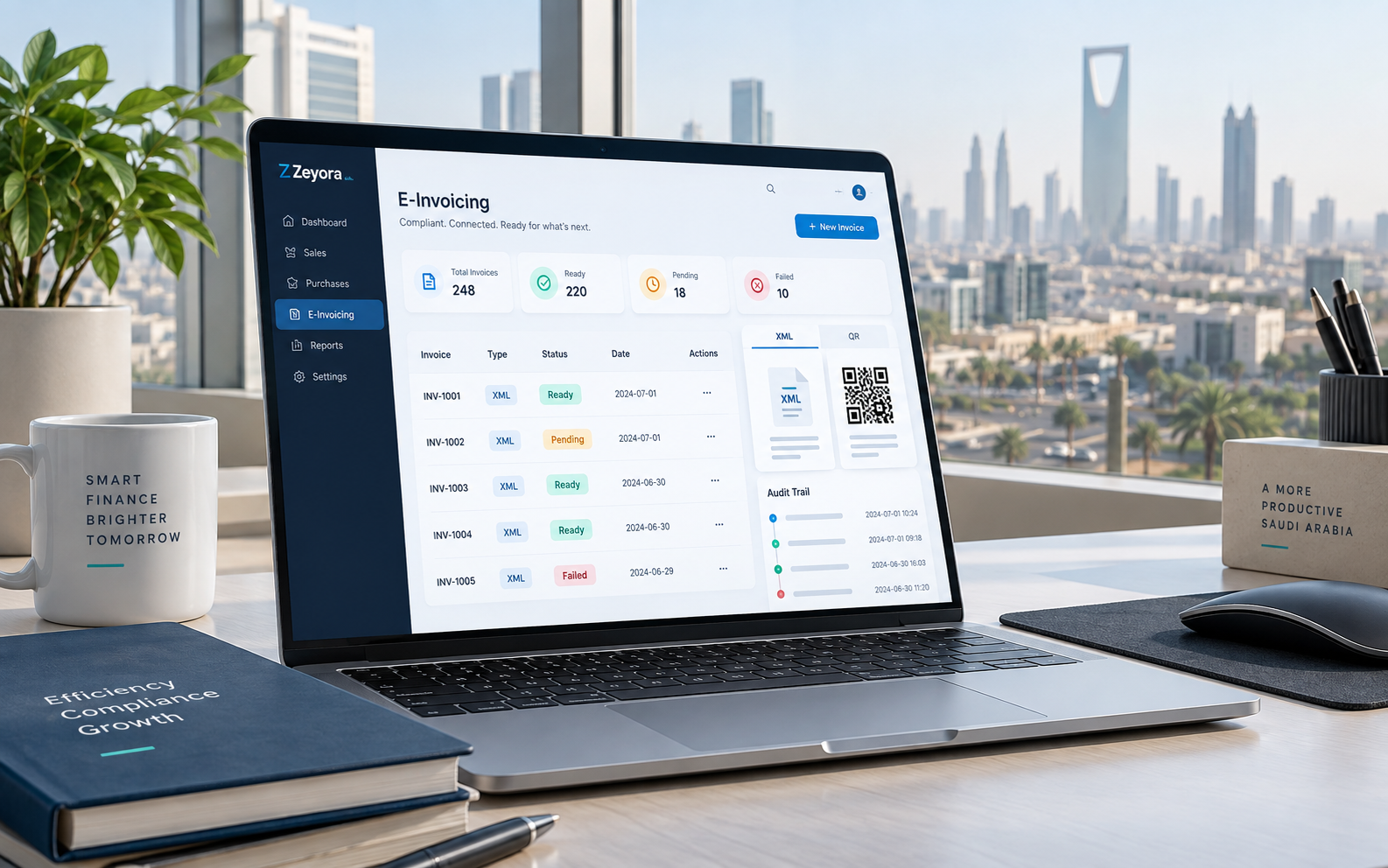
The best starting point is simple: make sure the people, data, approvals and records around each invoice are clean before production activation.
Start with seller and environment setup
Before a Saudi invoice workflow can be trusted, the seller profile has to be complete. Finance teams should know which company entity is issuing invoices, which VAT number is used, which address details are required and whether the tenant is still in sandbox, simulation or production planning.
This is also where EGS unit information, CSR preparation and CSID credentials need careful ownership. If those details are handled informally, the finance team may not know why one invoice is pending while another is ready.
- Saudi seller name, VAT number and national address details
- ZATCA environment and mandate status
- EGS unit ownership and CSR preparation
- Compliance or production credential readiness
Do not leave customer data until the last day
A lot of ZATCA delays come from ordinary customer records. The invoice may be correct commercially, but the record can still be weak if the buyer name, tax identifier, commercial registration or Saudi address fields are missing.
For Saudi B2B work, the customer profile should be reviewed before the invoice is posted. It is much calmer to fix the customer master record once than to keep correcting the same details on every invoice.
- Commercial registration where it applies
- Street, district, building number, city and postal code
- Saudi and non-Saudi tax treatment
- Clear buyer/supplier name and contact information
Track XML, QR and submission status like finance work
E-invoicing artifacts should not disappear into a technical folder. Finance users need to know whether a document was generated, signed, cleared, reported, rejected, pending or waiting for retry.
That status is useful even when the technical work is handled by an implementation partner. It gives the business a practical way to follow up, answer audit questions and avoid silent failures.
- Generated XML and QR records
- Clearance or reporting result
- Warnings, errors and retry notes
- Audit events tied to the invoice, credit note or debit note
How Zeyora helps
Zeyora connects Saudi ZATCA readiness with CRM, customers, sales billing, purchases, accounts, approvals and reports. That means the invoice workflow is not isolated from the records people use every day.
The right rollout is still important. A Saudi tenant should be reviewed, tested and activated according to its document types, credentials and operating environment before production use.