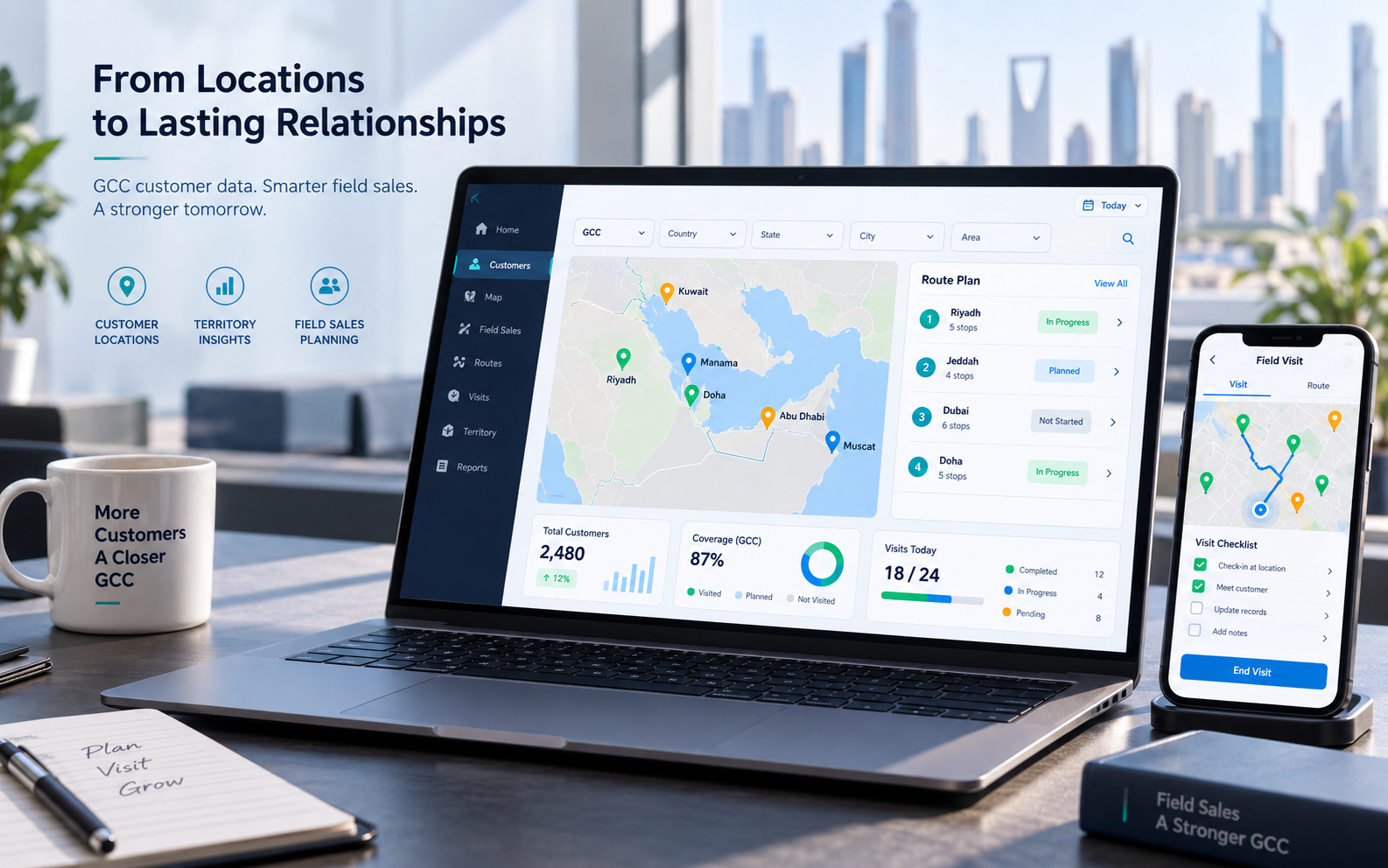
For GCC businesses, clean country, state and city fields help teams route work, understand customer coverage and keep records ready for finance or compliance review.
Bad location data creates everyday friction
When customer locations are typed differently by every user, reports become less useful. Riyadh may appear several ways, districts may be skipped, and the sales manager ends up checking records manually before assigning visits.
A structured location setup gives the team a better base: country, state and city are selected consistently, then more specific address fields can be added where needed.
- Cleaner customer segmentation by country or city
- Better territory and area planning for sales teams
- Less manual cleanup before reports are used
- More reliable billing, delivery and service records
It matters for field sales and service teams
Field sales managers need to see which staff member covered which area, which customers were visited and where follow-ups are still open. That becomes easier when customer records are tied to consistent GCC location data.
The same idea helps service teams. If work is assigned by city, branch, district or route, the CRM should not force managers to interpret messy text fields every morning.
It also supports tax and customer onboarding
Country and city are not only sales fields. For finance and compliance work, location can influence tax treatment, invoice review, customer onboarding and required address details.
Saudi ZATCA workflows, for example, benefit from cleaner customer address records. UAE, Oman, Qatar, Bahrain and Kuwait teams also gain from consistent location records when they review customer coverage or prepare regional reports.
How Zeyora helps
Zeyora supports structured GCC customer location records and connects them with CRM, field sales, accounts, reports and customer onboarding workflows. That gives teams a more reliable customer base without turning daily data entry into a burden.