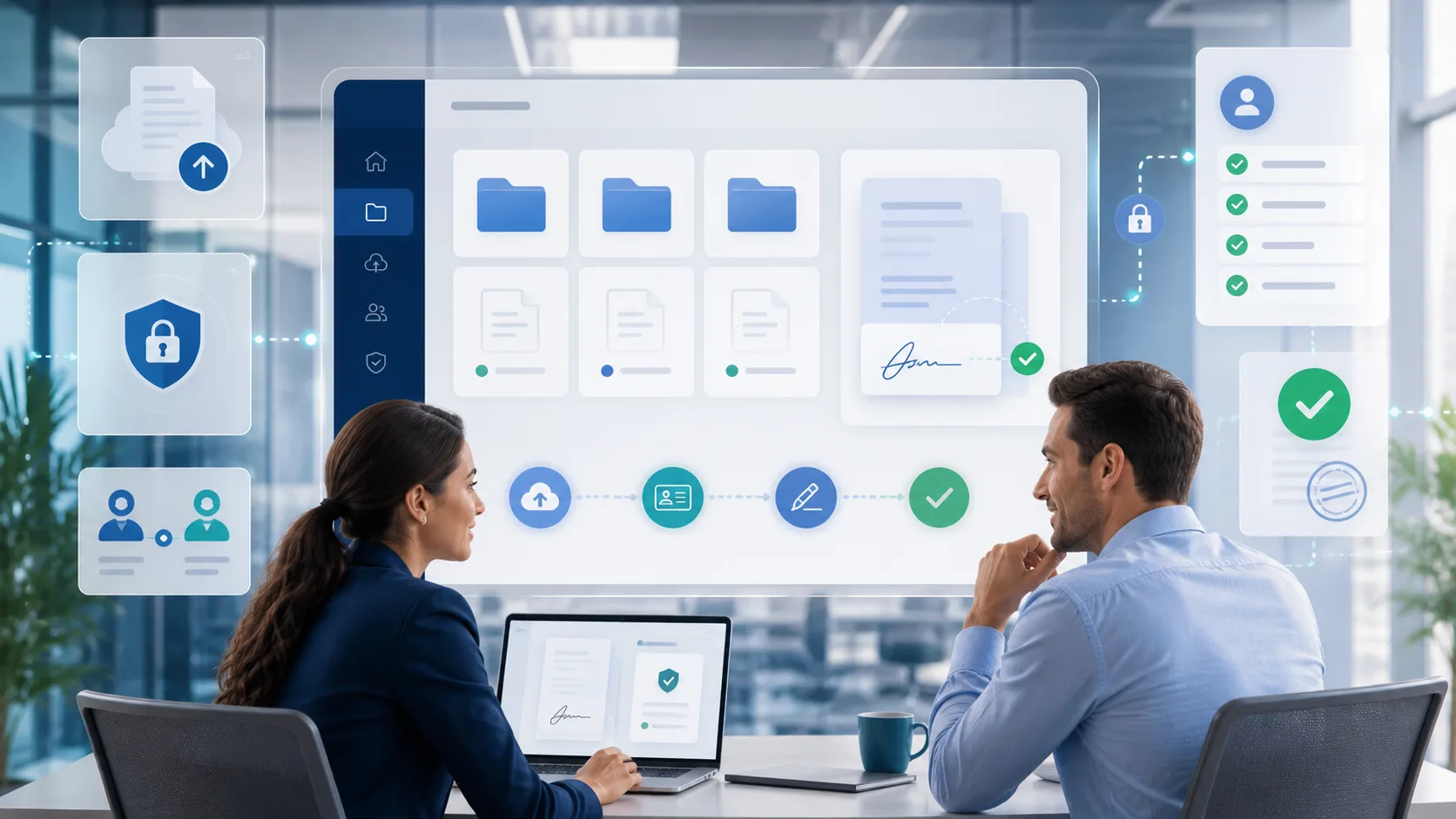
Client portal software gives customers one organized place to share documents, check requests, receive updates and communicate with your team. For service businesses, audit firms, accounting firms and project teams, that visibility can save hours of chasing every week.
The problem with document collection by email
Email works for simple conversations, but it becomes weak when several people are involved. Files arrive with unclear names, updated versions get mixed with old versions, and teams spend time asking whether the customer has sent everything.
A client portal reduces that confusion by connecting documents to the customer, request, project or engagement where they belong.
What a good client portal should include
The portal should be simple enough for customers to use without training, but structured enough for internal teams to control. Customers should see only their own information, while employees should be able to manage requests and follow-up from the main system.
- Document upload and download areas
- Request status and pending items
- Customer-specific access permissions
- Internal notes separate from customer-visible updates
- Activity history for accountability
Client portals are useful beyond audit firms
Audit and accounting firms are natural users because they collect many documents from clients. But portals also help maintenance companies, consultants, training providers, healthcare teams, construction firms and any business that shares files or asks customers for information.
The common need is simple: reduce scattered communication and make customer work easier to track.
Connect the portal with CRM and projects
The biggest benefit appears when the client portal is not isolated. Customer records, project tasks, document requests, approvals and reports should work together.
That connection lets managers see which customers are waiting, which documents are missing and which teams need to act next.
How Zeyora helps
Zeyora combines client portal, documents, CRM, projects, KYC and SignFlow workflows so teams can manage customer collaboration with clearer ownership and less manual chasing.